
Nhaka Workshop
Past Dates
| Dates | Location |
|---|---|
Jan 19 - Jan 23, 2026 |
DAS | SNDO | ECD, Amsterdam, NL |
Jan 12 - Jan 16, 2026 |
DAS | SNDO | ECD, Amsterdam, NL |
Jan 06 - Jan 09, 2026 |
DAS | SNDO | ECD, Amsterdam, NL |
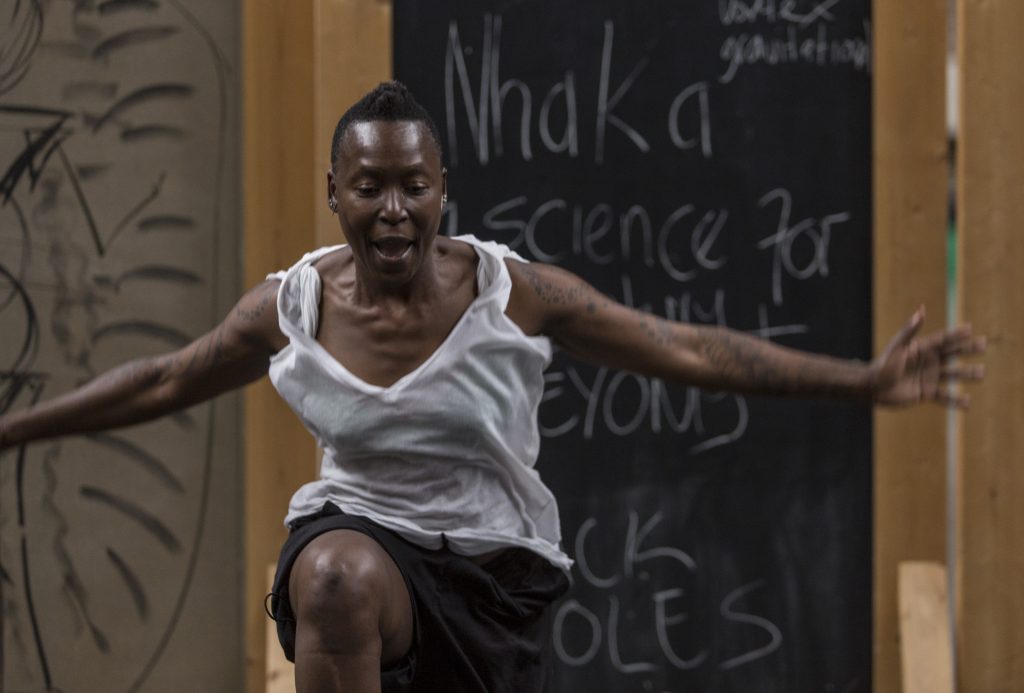
In an era when study, knowledge, and the role of the university as a place to gather are being questioned and queried, one could also ask: what about the artist as guest in these fundamental institutions? What is expected from them, what should their role be? How does the artist enhance the interrogations and make way for other unexplored mindsets and thoughts? For decades, I have participated in many university-led initiatives – often being the only person of color (or African) or that artist of color who can speak from her first-hand experience of being the other. Many of these initiatives can be as brief as a masterclass, a semester or a series of events that culminates in a performance event – mine or that of the students which I have generally choreographed.
I have always chosen to engage in these propositions as this is not only a means to earn a living, but to be amongst a generation that is able to question and/or be in a position to not repeat the prejudices of their grandparents. I engage even as I wonder what, if anything, I bring to these students and the institution, or even the communities where they live. I wonder about this because as long as the artist is but an occasional presence on campus and the curricula is not designed to encourage or embed decolonial practices, NOTHING changes. Thus, my deepest intention is to initiate and invigorate self-examination, reflection, shift, advance, movement, transformation through a physical manifesto.
Nhaka: Making Art in the Aftermath of Colonialism
Nhaka: Art Making, the Animist Body, and Radical Black African Presences
Nhaka (inheritance, legacy – in Shona language) is an animist decolonial practice and theory that I have been cultivating. The work and philosophy owe its genealogy to Shona culture and Shona spiritual practices. I have been decoding, recoding, and coding strategies on how to discipline and build the physical body, in hopes of developing an organism that can reflect and produce gestures that expand our understanding of the human and the relationship of the human organism with the natural and spiritual world.
By referring to Nhaka and applying it, the work with students will touch on physical practice, sound | gesture | space | spirit-text | language — but largely we will circle around the why it matters to make art in spite of it all – race – history – empire.
In the seminar, students will indeed participate in a creative and critical “thinking lab” designed to investigate the nature of black bodies and challenge legacies of colonialism that inequitably distribute the right to life. Working together, how can we provoke an exchange of knowledge that exceeds the colonial values of our grandparents?
In addition to thinking about race and colonial history, the seminar will ask fundamental questions about art and its purpose. What is art? Why do we make art? Students can expect to explore such questions in a vibrant exchange that engages with their individual ideas, intellectual experiences, and artistic projects.
“Readings” may be as broad as listening to sound, looking at films and singing together…
My hope is not to reproduce what a professor would do – but what I do as a working artist.
nora chipaumire guest artist with | Assistant teaching: Mohamed Yousry Fathy Saleh